Hello everyone
Can anybody give me design of flue gas desulfurization ? I need it for my projct.
Hello everyone
Can anybody give me design of flue gas desulfurization ? I need it for my projct.
Dear Members,
I need the MoEF circular dated Sept19, 1997 & June 30, 1998 related to use of beneficated coal in thermal power plants etc. Please help me if any one have the same.
Thanks & Regards,
Gopi
There are many benefits to using LED energy efficient lighting.
First, when you use LED lighting, you are using a lot less energy per unit of lighting output. Because of this, you will save money! The energy efficient LED Lighting lasts a lot longer than a “regular” light bulb. You can also amortize the cost of the bulb.
 Not only do you have the cost of the bulb, but you also can include the cost it will take to change the light bulb. The halogen bulbs increase the load of your A/C and that adds to what you are spending on cooling.
In addition, if you have to move racks/shelves or other equipment to change the bulb, the labor cost can be high. The person changing the bulb/lights could possibly break the luminaire or anything around it.
Therefore the 50,000 hour LED has a huge advantage over the 2,000 hour halogen, as the re-lamping occurs much less often. Visit us at www.cubed-llc.com
As a human being we all know how difficult if we don't have water. In summer we all face drinking water problem.In villages people walk too far to get water. Municipalities can not supply drinking water for all.
If we don't drink water frequently in summer, we may face severe health problems. Similarly animals and birds should also need water.
Please place a water in a dish or tub at your house open places. So that little birds can have some water. Save birds from this summer.
Source : BRIDGE TO INDIA blog
1.Fourteen projects have been penalized for missing the January 9th 2012 deadline for commissioning under the NSM. They have lost a cumulative amount of INR280m (EUR4.3m) in bank guarantees.
2.The Gujarat Electricity Regulatory Commission (GERC) has imposed penalties on 370MW worth of projects for missing the December 31st 2012 deadline for commissioning under the Gujarat solar policy.
3.Competitive bidding for projects is yet to take place under the Karnataka and Rajasthan solar policies.
4.Odisha has allotted five projects worth a cumulative 25MW through a competitive bidding process which has resulted in a tariff of INR7 (EUR0.10)/kWh, the lowest in India so far. These projects are outside of a comprehensive solar policy and are meant to help the state meet its RPO.
5. For batch one of phase one of the NSM, only nine projects (45MW) out of the allocated 30 projects (150MW) came online before the deadline of January 9th 2012.
6. As of January 28th 2012, the beginning of the new tariff regime, 600.5MW capacity was officially completed under the Gujarat solar policy. However, only 280MW had been actually commissioned before this date. The remaining projects have been categorized as ‘deemed to be commissioned’ and are exempt from the new tariff regime.
7. Andhra Pradesh signed a solar power agreement with Welspun Energy to set up a 100MW solar PV project in Anantapur district of the state.
8. At present, the US EXIM bank is the most popular source of funding. It has financed close to 65MW worth of projects in India and has close to 315MW in the pipeline.
9. Indian module manufacturers like Vikram Solar are investing in integrating along the value chain in order to improve their competitive position in the market.
10. Solar is competitive as a power solution for telecom towers, depending on their consumption and location.
11.A Renewable Energy Service Company (RESCO) business model appears to be the most viable to tackle the solar opportunity in the telecom tower segment.
12. The current quarter will see 320MW of PV installed capacity, led by the completion of projects under the NSM and the Gujarat solar policy.
For more detail on the Indian market,subscribe to the India Solar Compass April 2012.
WOW%20Introduction%20-%20ITC%20limited.pdf
Hi Team,
I recently got updates from my boss about the recycling techniques for "recycleable - dry wastes "
Pls find the pdf files with relevant details.
I find it worth . because usually , many companies dispose the waste to scrap vendors.
The main risk is we really do no whehter he is recycling in a environmental acceptable manner. But in WOW , I hope we know the destination of each waste and the main thing is the load to the landfill is reduced .
Thank you.
Junk food is bad for health. Its definition tells its inner story—food that is high on calories and saturated fat but low on nutrition. Junk food is all about pleasure and empty calories. So, the world is worried. It is now linked to the growing epidemic of non-communicable diseases—the ‘fat’ problem. Every ailment from heart diseases to hypertension and diabetes is linked to how one eats and how one exercises. Junk food has become the world’s biggest health headache. And some governments are taking action—banning junk food advertising in children’s programmes, removing it from schools and even imposing a fat tax. Sugar, salt and fat are items that need to be regulated. This means governments have to step in to control the powerful processed food industry. But this is not happening in India. It believes food industry has full privilege to sell anything—and kill people slowly and sweetly. So, the Pollution Monitoring Laboratory of the Centre for Science and Environment, a non-profit in Delhi, decided to investigate the food people love to eat—everything from chips to bhujia and instant noodles to burgers. All the food that is sold to us through persuasive and glamorous advertisements; all the food that our film and cricket stars tell us to eat. The laboratory checked for fats, carbs, salt and trans fats. The results are deadly and damning. Eat at your own risk, is the message.
find more at:
http://www.indiaenvironmentportal.org.in/feature-article/eat-your-own-risk
I was checking one page on IEN portal as routine. I got one mail about a training program of EIA and then I visited the page created for training on EIA process by a renowned institute. Then i checked theme & schedule and other details. Then I started thinking of Training. What is Training? how it shall be? who shall be the trainer? What shall be the content & schedule? etc. etc. I recalled my memory and noticed, many training programs are being offered by many organisations & institutes in recent years: on many topics & need has became a routine of India.... Great idea but what comes out at the end??? So I am asking my fingers to work on keypad and pushing my mind to recall all matters as well as all details earned during the days of my professional life stored in subconscious mind. The next words will the outcome of my stored & processed memory tuned by my fingers. Hope you will enjoy this and hope it will be interesting & helpful to you...
I remember Lord Krishna for his training....Starting with Lord Krishna as He Alone Conducted A huge lot of training... Every one knows him & his way of life, his words but I think no one knows him...For us as a human it is not possible to know him. only few people can know him little. well, will talk about him and his life related with training. All knows he use to say few words to one every time. His words were the way of life and people who were listening him were the luckiest to get extraordinary knowledge with out any so called training program. Lord Krisha was the ever best trainer and no one will be able to touch his foot print as for that our whole life as trainer will be lesser...It requires some centuries to work as trainer and even then will be in dark away from the light of training skill..His words came out as GITA which is proven training material then think of his live words without the training materials....How people were getting the knowledge which is almost impossible in any kind of training of recent time? Think of the versatile nature & theme of his training..He gave on child first day to his all of his life and then also on divine death leading to MOXA. nothing is left, no one is kept out...For every one's need he had a training and even that in few seconds of his speech....No time limit no framework nothing....Just a talk and the listener got lot of life long knowledge which never ended...
Same time think of other such great trainers..All worked in same way and we have their words as training material in form of Bible or Kuran or Gurugranth Sahib etc... and In buddhism you will see a series of such materials. All are the great materials and no training can give the knowledge these holly books gives. These are the tuned words of the trainers like the Divine power or Krishna, Muhammad Saheb, Gurunanak, Buddha, Jesus Christ, Khwaja Garib Nawaz, Saibaba ...Countless name who are the real & great trainers. These trainers never followed the way of modern training at any time of life.....They just delivered the life long knowledge instead of giving a written Learning material. Today In market, every one will see a book for training on this & that and only few will be appreciable. Why??? because while writing the author of good books follow the way of the said great learners...They tried to give their own earned practical knowledge instead of some theoretical - bookies words earned rather copied from some texts. Same things happnes when we go for a training.. I writtend well decorated material of training, Nice high-class food & hospitality and attractive training room... Even when you will go for practical training every thing will be so planned and fixed....Nothing will be live. Nothing will be knowledge delivering.. Just use your eye as camera and mind as memory. If something is deleted after the photo-shoot during the training, you will have nothing..Because you never earned knowledge...Ofcourse you joined training but what we got?how we got? when we got? and is there any thing like knowledge in the earned treasure? Recall your memory of any training program just now....Ok what came in your mind??? I am sure the memory says Attractive Place, nice Food, few friends joined training with you, one or two good trainer but mostly poor trainer...right? where is the knowledge? only in case of one or two rare training we can recall knowledge as our first recalled memory. Right??? It happens because no training we attained, all were a good mutual business rather a framed picnic.
I am sure many of the person are searching & running for the training information on this & that website or new papers or any other sources..Many people might have undergone many training programs conducted by institutes engaged in academic field or say theoretical/logical services providers. I am sure that such people might be thinking that "what comes as useful out of such training or training attained by them? What we learned is not coming in picture of usefulness in my project & business or life.." This happens as almost all training provided in recent age gives general idea of any topic or theme or study and can not serve as skill delivering training. Its just like a class room teaching to pass one single exam. For long lasting result giving training shall be based on a typically designed theme covering only live example base training..Say based on project /other work's Reports prepared in Past for Specific Sector or theme or task (preferably three four projects/works of single sector or task or theme) and then to go ahead with training based of the example reports/project. Further, training shall be based on maximum two or three sector or theme or task together, preferably one sector or theme or task for each training schedule. Only such training will be proven little useful so that while working on project of the sector one can remember the learned things and then apply his/her own knowledge to get maximum....
In my professional life (also as preacher as use to deliver a speech on all matters comes in my life), I have noticed many things which comes only through continuous learning but some skill comes with field experience which can be commonly applied logically for any details including Scientific & technical details in the works. Also I have noticed that people are getting good knowledge only from the the nicely planned training (as I suggested above) and after such training they performs well in their field to bring high enough quality in their work. Now a day, as many operations/tasks requires knowledge of All or many Subject for any single task or work, it becomes difficult to understand by a person - expert in single Subject (mainly driven by one's qualification) but when one put training materials live with examples and explanation for understanding in a training program for such person, it will work like the master key for all tasks or works he performs. Also when one conducts a well framed training with examples, age -gaps in the participant comes forward which requires versatile training skill of ones to handle all age trainee or participant. Also the trainer should have versatile skill of training to handle different subject issues raised by a participant to present them in logical way so that all other participants can understand what is going on. Over more, the person joining training will have different exposures (in terms of institute or background fairness) or & experience (in terms of field or position or years), So the experience & exposure aspects of participants are also needed to manage in training framework. Further, I have also noticed that in training of two three day to one two week, many trainers offers their lectures-- PURELY Lectures like those of my college days...Such lectures pushes one only to take away the documented training materials for their understanding or to remember the words only instead of getting exposure to the useful knowledge of one trainer which can be earned as a life time treasurer. More than these, In such training, when one trainee gets lined up with one trainer to understand his lecture break comes and another trainers enters in to picture of training. The trainee starts struggling again to understand what is going on??? Why this happens??? Because of the person specific style of teaching. So It is not at all fruitful if the trainers keeps changing in short time..I noticed that a training given by one trainer is more fruitful instead of training given by many trainers. In case when more than one trainers are expected to give training their sessions must be schedules in one slot of time instead of breaking his/her schedule in defined numbers of sessions or giving one or two short time sessions with big interval. Continuity of the sessions of one trainer shall be maintained to get maximum outcome from the training (maximum gain of knowledge by Trainee). In addition to these mostly training are planned in well defined time schedule and the sessions ends up undesirably when trainee is getting knowledge and another session of other trainer is started which is almost useless or out of focus or difficult to understand. So it is must to have flexible training schedule for any good training so that the participant can say we have learned a lot and the trainer give me exceptionally more than we expected. When goes back to their places for executing their knowledge they must be able to recall what they learned and then they will say we are lucky to have that training. We are able to accomplished the task which is not of my subject but I learned to work in this subject from that training and knowledge earned in that training have now becomes my main manual rather manual of Modus Operandi. IN MOEF WORD MO---A SO CALLED RULES & ACT ISSUED BY MOEF TIME TO TIME BY OVER RULING THE RULES & ACT OF NATION... yes its true the Modus Operandi prepared by trainee after the trainng shall become the document like MO as it will break all rules of having qualification in one specific subject. They will work for any subject without qualification in the subject. So ultimately such training will become a graduation or PG program in all subject rather Doctorate Program in all subject. They will keep researching to improve their knowledge earned from the training and one day they will be the trainer. That should be the main aim of the training.
So what is required??
A unique training program with examples for maximum two sectors or theme
A taring program solely driven by some skilled trainers (maximum two)
A training program with flexible schedule which can be planned on its way without breaking time line when trainees are earning knowledge. The schedule shall be driven by the trainee and timely they shall raise the change in theme or topic and thus the trainer. So for this it is must that The Trainer must be comfortable with this principle to accept the rejection by trainer without looking to their own ego if made during training.
A training must be supported by post training regular communication to provide support to trainee by trainer whenever they required in their life.
A training must have a plan to get in touch with the trainee to get idea & necessity of the trainee in future after the training.
I hope my above understanding & suggestion for and Ideal Training programs becomes ones tool for selection of training program to join as well as to design a training program to deliver the knowledge of expert trainer to all needy person. I believes that such training program only can make our next generation alive in innovation and so to make our country on the top of field of unique services & innovative research & development.
With wishes of seeing such training programs as India's standard style of training program.....Do something with such training for Protection & conservation Rather Improvement of our Environment and to make our child understand about the importance of the healthy environment. Do such training in your home at least for your child, father, mother, wife, husband, home maid, and all who are a part of your routine life.
PLEASE CORRECT ANY MISTAKES IN THE ABOVE, AS MANY ERRORS OR MISTAKES ARE ANTICIPATED AS WRITING THIS WITH GOOD SLEEPINESS IN EYES AND WITH HOPE OF GOOD DREAMS WHEN MY EYES ARE CLOSED. I WAS THINKING TO WRITE THIS LATER BUT MY THOUGHTS MADE ME AWAKEN AND NOT LETTING ME TO GO TO BED SO CONVEYING THIS TO INTERESTED NOW AND SO ERRORS AND MISTAKES HAVE TRIED A LOT TO COME IN THE ABOVE AS THEY HAVE POSITIONED THEIR SELVES ON MY EYES AND FINGERS. I HOPE TO HEAR FROM YOU ABOUT THE ERRORS & MISTAKES CITED IN ABOVE AS WELL AS COMMENTS ON MY VIEW OF TRAINING.
Anticipating Best & unique training programs from EVERY ONE, MAY BE IN THEIR HOME OR THEIR OFFICE OR IN A SHOP OR OR OR ANYWHERE THEY FILL BEST..... TIME NEVER PREVENT US TO DELIVER SUCH TRAINING, WE CAN NOT UNDERSTAND THE TIME WHILE DETERMINING THE REQUIREMENTS OF TIME FOR FRAMING THE TRAINING. SO MAKE THE TIME YOUR FRIEND AND ASK HIM WHAT SHALL BE DELIVERED HERE. YOU WILL SEE EVERY DAY RATHER EVERY MINUTE WILL BECOME A UNIQUE TRAINING PROGRAM.
I am waiting for the morning of my next age year and thinking to do something which i am dreaming 19??... So, if I get opportunities & idea from suggestion or comments of readers of the page, i am thinking to start one mission of preparing small guides & materials on training program & training frameworks. Also Starting a unique mission of my choice from 19th April..That is ?????? Photography..I am looking forward to click some good photographs in next few years and I will do click with wish that my photographs will speak something which are the emotions-feelings-pain-happiness of the people & the time....
Thanks a lot to give plenty of time to read my words.....Now spare one two minutes and write some comments or suggestions on my view of training, theme of photography means suggestion & comments for my mission 2012.
Thanks & regards,
Dr. Hemalkumar Naik
HN ECOERECTER
094279 71249
Environmental Impact Assessment (EIA) is an important tool to inform decision - makers, regulators and stakeholders, about the possible environmental, social and economic costs of the proposed project. To be effective, it requires the active involvement of all concerned stakeholders.
There is a genuine need to develop the capacity of the state-level regulators and state level expert appraisal Committee (SEAC) to screen and scope the EIA process, to conduct transparent public consultations and to evaluate the EIA reports, especially after the new EIA notification. At the same time, there is a need among CBO, NGOs, academicians, and environment managers to review and interpret EIA report, as they are technical in nature.
Centre for Science and Environment recognises this need and has developed a hands-on five-day training programme aimed at giving practical exposure to participants on EIA with specific reference to coal based power plant, cement, pharmaceutical, mining and others. After the programme, the participants shall have:
The programme will cover:
1. Exposure to all aspects of EIA, from its theory to the practical – such as better understanding regarding
Better understanding of the EIA process – from screening, scoping, data collection to impact assessment as well as the role of public consultation
Better understanding of the environmental and social impacts of the industrial and developmental projects
Better ability to review EIA reports and identify its strengths and weaknesses
Increased ability to play active role in post-EIA monitoring.
2. Better understanding of the EIA process – from screening, scoping, data collection to impact assessment as well as the role of public consultation
3. Better understanding of the environmental and social impacts of the industrial and developmental projects
4. Better ability to review EIA reports and identify its strengths and weaknesses
5. Increased ability to play active role in post-EIA monitoring.
 SCHEDULE
Course Duration: May 21-25, 2012
Venue: CSE, 41, Tughlakabad Institutional Area, New Delhi-110062
Time: 10:00 AM to 5:30 PM daily
Course fee: Rs 9,900 ((For industry, environment consultants and regulators) 50% discounts for NGOs, academicians and students)
Last Date for Applying: May 1, 2012
For Registration kindly contact: swati@cseindia.org
OPEN FOR:
NGOs, Regulatory Institutions (such as SPCB, state environment impact assessment authority, Environment Consultants, Students, decision makers and Industries
A certificate of participation will be awarded to all at the end of the programme.
COURSE CONTACT
Swati Singh Sambyal, Industry & Environment Unit
Industry & Environment Unit, Centre for Science and Environment
Tel: + 91-11-29955124/ 6110, Extension: 281, |
Fax: + 91-11-29955879 Mob. No.: +91 9910496283
E-mail: swati@cseindia.org
Campus Sustainability Organizations Partner to Expand Resources
Collaboration designed to enhance global higher education sustainability dialogue
York, U.K. (March 27, 2012)—With the goal of fostering a global dialogue around higher education sustainability, the Association for the Advancement of Sustainability in Higher Education (AASHE) in America, Australasian Campuses Towards Sustainability (ACTS), and Environmental Association for Universities and Colleges (EAUC) in the United Kingdom have partnered to share member resources.
For more information, check out this link.
A developing country like India where around 10% is the unemployment rate, more then half of its population is below poverty line (BPL) as per ADB BPL of 2$ a day; employability has been a cause of concern for government. Proper and efficient technical education and the opportunities thereafter are lacking. Beyond IITs, IIMs and some top technology and management institutions; the quality of education has been not very satisfactory. Despite producing quality professionals, Institutions put their attention to the pomp and show. Industry- academia linkages is lacking and due to what the graduates are not able to find a satisfactory job after the completion of such professional courses like B. Tech, B.E, MBA etc. There is a huge mismatch with the industrial standards of hiring a professional and the raw graduates prepared by these institutions. The practical knowhow and attitude of today’s graduates are a cause of concern for the industry as well as the economy. According to a study, Engineers in India does not match with the international standards and their productivity is one third of an engineer from USA or UK.
But what can a graduate do? They are not trained properly from the beginning. Graduates are groomed under the supervision of these institutions which plays a very pivotal role in deciding the career future of any student.
Today, a peon in a government organization is paid much better than a person who is an MBA/ MA/ B.Tech etc. Unemployment and thus poverty is pushing our highly qualified graduates’ steps back and they feel very frustrated and unable to perform and sometimes they are involved in different bad and criminal activities. They have studied hard, took up all the savings of his family and what is the result, he is stranding in the midway under sun finding a job. He is begging here and there to give some jobs. He queues in long line where for one post, there are more than hundred people. The tremendous pressure from family and society makes them to earn at any cost. Sometimes, some of these strugglers defeat with the situation and the surroundings and he takes the extreme step i.e. suicide. If he is able to find a job still he is not paid as per his qualification. He is exploited maximum and the job pressure takes away all his happiness and personal and social space. He becomes alone again with having a job. As per the international labour law; around 35 hours a week on an average is the criteria of working hours; but in India we work 50 hours a week usually. This is the height of the unethical and unsustainable practices in the Indian job market. Is this what he has studied and spent huge amount of money for? Those money could have been spent in some other ventures like in setting up own ventures, enterprises etc. Instead of working for others they could have worked in the sectors which suits and interests him. But now after spending so much on his education he is not able to face his family and beg for some more money.
The societal environment needs to be more practical and entrepreneurial. Instead of finding a job an Engineer or an MBA can use his/her expertise to open up his venture, which not only provides him/her mental satisfaction but also the reward in terms of better economic gains. They would be able to generate more economic contribution to the society and also the jobs, which will enhance the inclusive growth and development of society at large. We are not able to make a bankable and feasible business plans after getting these higher studies. Then what is the utilization of the studies they have done. Instead of producing job seekers, governments, institutions should take up a stand towards making graduates job makers. Through the use of business incubators at institutions, they can also enhance their salability in the market.
I asked many of my friends about the aim behind gaining a higher education. Most of them told about getting a good job, good compensation after the completion. People should have to understand about the benefits of quality knowledge and practical experience which itself usually followed with a satisfactory job.
I personally don’t think that the academic qualification is very necessary. Instead one should think and find one’s real instinct, strengths and interests which can be nurtured into an idea. This idea can be transformed into an enterprise. The enterprise can provide not only self economic sustainability for an individual who starts it but also it generates employment for others as well.
Academic institutions should pay more attention towards the industry demands. Through proper communication and interactions with the industry they should not only design the course but also they should increase more practical on job trainings in curriculum in terms of internships. Generally for an MBA internship is of 4 months on an average. This should be increased to 10-12 months so that a graduate learn the different dimensions and complexities of businesses and be more capable of handling the situations in the management process. Time has gone when only the lectures, attending classes and attaining qualifications were more than enough for a graduate to satisfy the role profile of any company. Graduates need to be more practical, efficient and productive in the complex business environment these days.
In this ever increasing competition, decreasing focus of government on unemployed literate youth is a major cause of concern.
This dilemma whether one should attain a good qualification MBA/MCA/B Tech/ B.E etc or should start an enterprise very first would have to be answered. Academic institutions will have to understand the value of hard earned money. They would have to work for the societal upliftment in order to bring economic and social prosperity.
Greetings to all you budding enviro-enthusiasts and academic professionals alike!! Since so many students and environmental professionals are part of this expanding network, I would like to take this opportunity to introduce one of the finest training institutes for environmental education in our country.
BVIEER was the brainchild of Dr Erach Bharucha, started way back in the early 90's. Gradually it has grown from being an institute founded in his house, to a recognized 'A' grade NAAC accredited institute in Katraj, Pune, as of today. BVIEER conducts post graduate training courses in E.V.S. as well as in Geo-Informatics. The institute has been involved in various projects sponsored by the state as well as central governments over the years, a recent one being a study on the current ecological status and identification of potentially sensitive areas in the Northern Western Ghat region (headed by Dr Madhav Gadgil) which dealt with the conservation of natural resources and biological heritage in this globally recognized hotspot of biodiversity. Students passing out from this institute have known to be well equipped with theoritical as well as practical knowledge through field visits to wildlife sanctuaries, industries, national & international seminars, workshops, etc. The institute also has an international collaboration with the University of Cologne, Germany. Getting a job post training, has never been an issue with the students here, as the faculty is well connected with the current industrial scenario.
More information regarding the courses are given in the link below. I request all of you, especially the green teachers, to go through the BVIEER website and advice students who want to take up safeguarding the environment professionally, to consider this institute seriously as a stepping stone in their career.
GEO-Enviroment Poster FEB2012.pdf
Website: http://ieer.bharatividyapeeth.edu
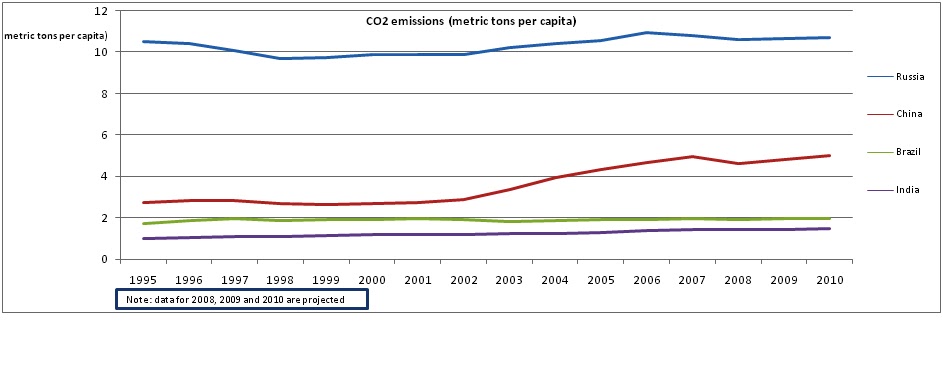
Increasing economic activities, populations and the increasing impacts in terms of carbon emissions have started putting a negative impact on environment and ecology. In order to make a sustainable and healthy living conditions for us and our next generations, we at micro level level to have to take some measures for greening our surroundings.
At a micro level, we ourselves can take steps like planting trees, aware ourselves and our people around, change in our consumption pattern, innovate new technologies in order to develop a parallel resources pool and enhance our productivity and resources efficiency.
Carbon emission Reduction has been a challenge for the sustainable development of the world as a whole. According to the Kyoto protocol- UNFCCC (United Nations Framework Convention on Climate Change) there is a binding target for 37 industrialised countries and European community for reducing the GHG (Green House Gas) emission an average of 5% over the 5 year period 2008-2012, taking base as 1995. The developing economies have been given flexibility in their carbon emission reductions.To offset the carbon and control pollution different trading schemes have been taken into considerations. Carbon Emission trading is a market based approach by providing economic incentives and cap limit for emissions. Firms need to hold the no. of permits also called carbon credits (1 carbon credit = 1 ton Co2)
Challenges always keep coming. Proper actions are needed. In addition to bring awareness; we will have to pursue with each and every aspects of environmental degradations at a grass roots level.
Dear all.
Please guide me if any subsidy available for E-Waste Recycling.
my mail id: danis1017@gmail.com
Corporate social responsibility refers to the various responsibilities in the process of making an organization a responsible corporate citizen of the society.
Within the business world, the main “responsibility” for corporations has historically been to make money and increase shareholder value. Gradually, in the last decade,
the movement and support for the environment, for local communities, for better working conditions, and for ethical practices has gathered momentum and taken hold.
These days, businesses have started measuring the performance and that is calculated on the basis of the tangible and intangible value additions which not only include the financial performance but also other non- financial performances. Proper reporting is done also known
as sustainability reporting, helps the organizations in the process of brand building, internal and external communication. The reporting benefits in maximum utilization of available resources, stakeholders satisfaction and sustainable development in real terms.
The different factors in measuring corporate social responsibility (CSR) practices include transparent trade practices and transactions based on ethical values, following the legal compliances, respecting the communities, people and environment. Beyond making profit, companies are responsible for their negative impacts on the stakeholders and the planet. Different stakeholders are their employees, customers, business partners, investors, suppliers and the community. In order to satisfy the expectation of all the stakeholders, the companies should be more environmentally and socially responsible
business operations.
It is also described as “triple bottom line” approach for the impact measurement, which includes the corporation’s financial, social, and environmental performance in
conducting its business.
Thus it (CSR) is not about charity, but it belongs to the core business of a company and therefore should be an integral part of doing business. Companies are under increasing pressure from multilateral societies and governments are taking strict measures for corporate to take socially responsible conducts and actions.
